What’s in your winter hearth?—Foraging for the perfect firewood


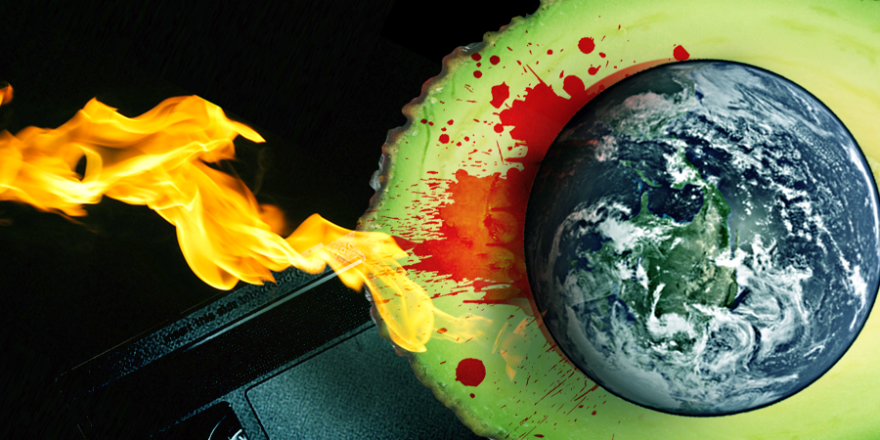
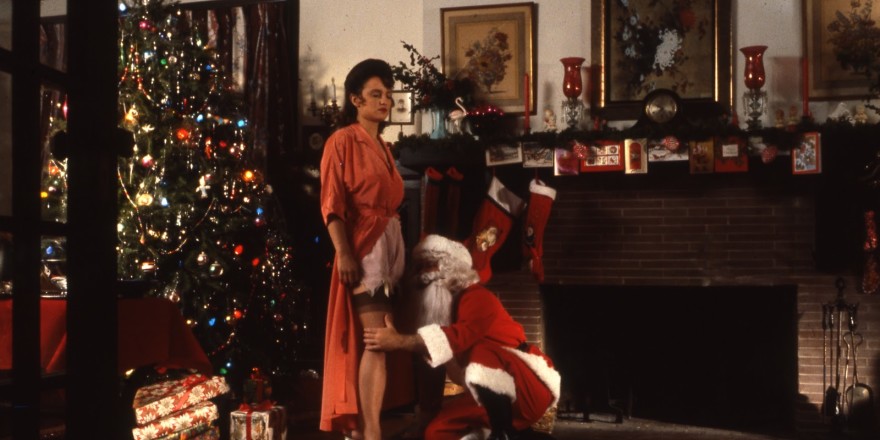
With the solstice behind us, we in the north are settling in for the quietude of winter’s lingering, deathly chill. Perhaps you’ve already a hearty cord of wood cut, stockpiled, and seasoned, just waiting to flood your dacha with a soft glimmer. Or maybe you’re more the moneyed layabout type, opting instead to outsource all the modest pleasures of this earthy labor. Either way, there are several factors decisive to selecting the perfect firewood. For the indoor hearth, we recommend well-seasoned hardwoods, which tend to retain less moisture than softer woods.

Red Oak: Burns cleanly, slowly, and without much fuss. Oak is a holiday favorite due to the intensity of its heat, its relative longevity, and that classic fragrance to fill your lungs with warmth in the frigid depths of midwinter.

Shagbark Hickory: Perhaps the hottest burning wood there is, the dense, hard-to-split shagbark variety is especially suited for your stove or fireplace, where you can enjoy its languorous, flickering glow late into the evening.

Black Cherry: Seasons quickly, splits easily, and burns with a medium heat. But the real virtue of cherry wood comes from its sweet, captivating aroma, an enticing complement to some mulled wine.

Sugar Maple: Another wood with a high intensity heat, maple seldom burns so well as hickory or oak, but we like it for the dreamlike swirls of light, the burst of sparks, and memories of snowfall in the nighttime stillness of a New England forest.

Piñon Pine: The hardest of the softwoods, we’ll make an exception for this slow-burning, Southwestern classic solely for its unforgettable cowboy campfire smell.


On Mormon holiday: An exclusive visit to Kolob, the holiest resort destination in the galaxy

With the election season finally behind us — and Mitt Romney thankfully defeated — we can’t help but find ourselves left with a certain white, multimillion-dollar, Mormon-shaped hole in our lives. Looking back with fondness at all the gaffs, the absurdities, and the warmly nihilistic compulsion for straight faced lying, there’s quite a lot to reflect on with the Romney campaign.

Mormonism, a little-known offshoot of Zoroastrianism, has become, perhaps, the only major religion that can be called truly American. So, with a newfound fascination unencumbered by political dread, we embark on a journey to the Mormon homeworld to learn more. To get there, we sat down with Dr. Ammon Allred, a professor of philosophy who also happens to have grown up Mormon, and ask him to tell us what he knows about Kolob, a gated resort community tucked away in the night sky where, rumor has it, god built his gilded estate.

Dr. Ammon Allred:

So far as I know, the only way to get to Kolob if you don’t have a temple recommend (ask a Mormon friend) is to go to Tulum, on the Yucatecan coast.  It was here, after all, that Cortez (I think it was) first alit in North America, and declared: “This is the place.”  What you do is you ascend the Temple of The Descending God, tap on the back wall and ask for Lamoni.

Important:  This only works on April 6.

Anyway, if you do this right what will happen is that you’ll see the light shift as though there’s a heat wave.  It looks a lot like a scene from Zelda to be honest.  (This is actually where they got the idea for Zelda).  And before you know it, you will have hied to Kolob.

Actually, you won’t be in Kolob because Kolob is a star, dumbass.  You’ll be on Planet Kolob-6, as we affectionately call it.  (It’s official name is also Kolob 6 but without the affectionate inflection).  For my people it’s a home away from home.

My actual home was Utah, and I was always surprised that folks would travel there from all around the world.  “I mean, it’s a nice enough place,” I’d tell anyone who told me they wanted to visit, “but watch out for the people.” Kolob, though: that’s another story.

Here are some misconceptions that people have about Kolob 6:

1)  There are no Thetans on Kolob-6.  Thetans are not real.  Duh.

2) You are expected to bring your own sunscreen when visiting Kolob-6.

3)  Kolob 6 is not the dwelling place of God.  It’s more like His vacation home.

In fact, last time I was there, you could hardly see His mansion, because Mittens had just bought some primo real estate right next to God’s — right on the sapphire encrusted beach (whose cliffs sparkle like Marie Osmond’s eyes).  Anyway, wouldn’t you know it, he starts complaining about the size of the mansion allotted to him and before you know it there’s such a ruckus from all the work he’s getting done, it’s all you can do to hear your own harp playing.

I never did learn for sure, but rumor is that God couldn’t handle the noise and hied himself to some other nameless star so he could get some peace and quiet.  Mitt’s youngest son, Trink, then moved into God’s old place and turned it into Kolob-6’s most exclusive club for Bronies.  (Even though Bronies are actually native to Kolob-2).

One night, after I’d done too many Jello-shots up the nose, I threw up all over Gladys Knight’s pet iguana.  And that’s how I got ejected from Kolob.

Maybe if you’re lucky after you die you’ll be baptized and then you can visit Kolob.  But I’d really urge you to try and visit during this life.

It really is a beautiful place.  Just watch out for the Thetans.

Stay in bed, light some candles, and curl up with a good map

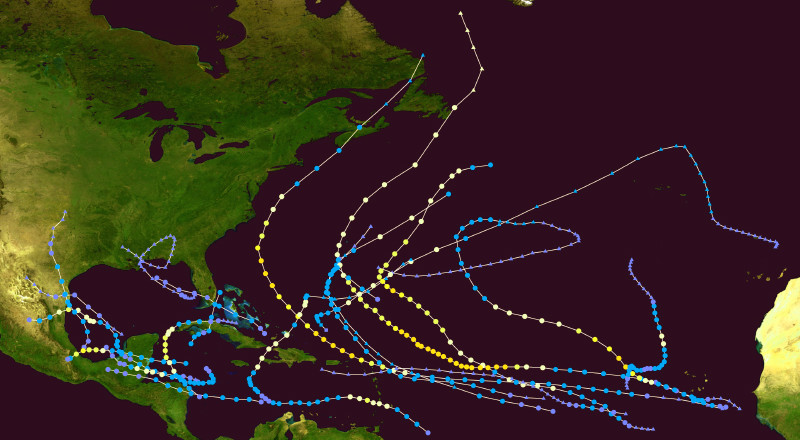
With city transit at the mercy of what’s been dubbed “Frankenstorm,” we here in evacuation Zone C have found ourselves with ample time to remain indoors and contemplate the aesthetics of hurricane visualizations. Although an Ancient Greek mantle like Athena would’ve perhaps been a bit more epic, the super storm’s current invocation of Shelley’s Frankenstein; or, The Modern Prometheus is perhaps also a fitting reflection of the anthropogenic conditions that’ve fueled its foamy ire. But all this science and meteorology receives enough attention during natural disasters. How about a little appreciation for the longstanding artform of generating hurricane maps?


Il y a dans l’orange une aspiration à reprendre contenance après avoir subi l’épreuve de l’expression

Emerson called New York City “a sucked orange.” We’ll take it as a compliment, because today’s an orange-letter day here at Overhead Compartment, wherein we offer some curated delicacies of a tart persuasion. The scent of citrus is in the air, a waning light extends its amber glow—we’re serving tea and oranges that come all the way from China. Enthusiasts for simplicity that we are, we can’t resist the opportunity to isolate an aesthetic that we think worthy of admiration. Conjuring the zest of its namesake fruit, few other colors cast such an invigorating and distinctive mood as orange. We find it quite fetching in its radiating complexion and warmth.

In France, peeling the fruit is not yet considered an inconvenience.

Our regard for the color orange follows the same languid fashion as that which John McPhee, in his excellent book Oranges, describes of the fruit’s ritual celebration in France: “A Frenchman sits at the dinner table, and, as the finishing flourish of the meal, slowly and gently disrobes an orange. In France, peeling the fruit is not yet considered an inconvenience.”

The wonderful French poet and essayist Francis Ponge, certainly, observed such practices. “…it’s not enough to have only spoken of the orange’s special way of scenting the air and rejoicing its executioner,” he writes. Ponge offers a decisive rumination in “l’Orange,” from his Le parti pris des choses: “Emphasis must be placed on the glorious color of the resulting juice which, better than that of the lemon, forces one’s throat wide open as much to pronounce the word as to swallow the liquid.”

Emphasis must be placed on the glorious color of the resulting juice.

It’s unique for a color to possess such an immediate corollary in nature. Our admiration for orange is inseparable from oranges, evoking especially “the covering of this tender, fragile, pink oval ball inside its thick moist absorbant blotting paper,” a surface that demands to be squeezed. Ponge concludes: ”…the extremely thin but intensely colored epidermis with its bitter oil is just ruddy enough to catch worthily the light that reveals the perfect form of the fruit.”

A brief and secret history of the pumpkin spice trade

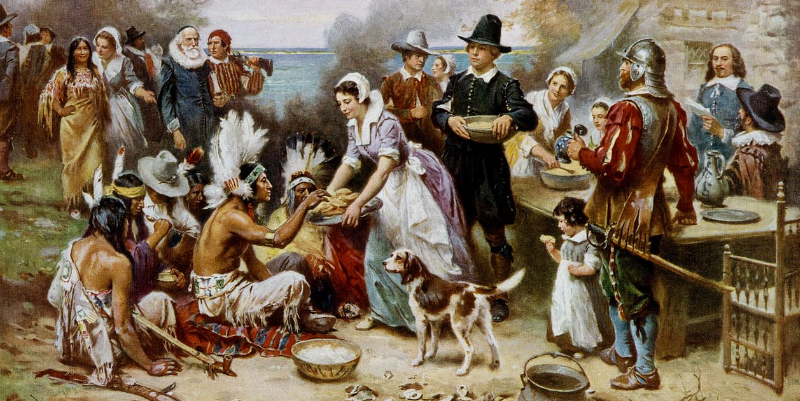
Every dullard schoolchild knows the story of how pumpkin spice was introduced at the first Thanksgiving, leading to the economic expansion of the West and the widespread consumer franchise of assorted Fall flavors that we hopelessly depend upon to mark the changing of seasons. Pumpkin spice has infused our lives—lattes, doughnuts, lip balm, ice cream, beer, soy sauce, cholesterol medication—without these wonderful autumnal reminders, we would have no way of knowing when to harvest our cash crops.
Few people today realize that pumpkin spice, though historically traded as a discrete commodity, is actually a composite of several different spices. Chief among these is the titular pumpkin, an obscure and rare spice grown on the coastal region of northern Mongolia and transported into the Arab world through the Balkans along what later became known as the Great Pumpkin Route. Given its extremely sour, unpalatable flavor when consumed alone, Persian merchants adopted the practice of diluting the rich, flaky pumpkin with another key spice: cinnamon.

By the early fifteenth century, demand for cinnamon had grown considerably in the frigid climes of northern Europe, where it was used to line duvets for the noble classes during nutmeg famines. The introduction of cinnamon as a seasoning, however, didn’t occur until Queen Starbuck VII of the then-fictional Franco-Swedish suzerain began commissioning freighters to bring this velvety cinnamon-pumpkin mixture around the Strait of Ikea. Countless tales have been told of privateer smugglers and ruthless pirates fighting it out in this bloodied and aromatic stretch of sea which served as the main economic conduit between the East and the West for the next three centuries.

But the real key to the history of pumpkin spice taking its place as the mainstay of the civilized world lies in its complex flavor, invoking wool sweatered walks through the park with a bundle of paperbacks peaking out from an old leather satchel. This unique flavor is responsible for that trademark crack-addled compulsiveness with which, at the first sign of yellow-tinted foliage, the multitudes blindly queue for their latte fix.

It was from the ancient wisdom of Native American marketing strategists that colonists in the New World learned to discern each and every part of nature as its own sacred brand identity. And so, the final chapter in the history of the pumpkin spice trade closed with the drafting of the American Constitution, supplanting British imperial rule with an oppressive theocracy. It was in that first amendment that our Founding Fathers decided to replace the old supernatural pagan belief in an autumnal equinox with aggressive corporate advertising targeted at a core demographic of unthinking middlebrow sheep.

So, the next time you cuddle up on a bench next to your wifey or your hubby, arrogantly wrapped in your matching scarves, and you find yourself conditioned to associate a fundamental temporal category of nature with an arbitrary consumer brand, you might pause for a moment before Instagramming that frothy Venti™ soy latte like a mindless dolt to reflect on the small role that you’re playing in the rich tapestry of history.

1