Emory Douglas and the visual language of the Black Panther Party

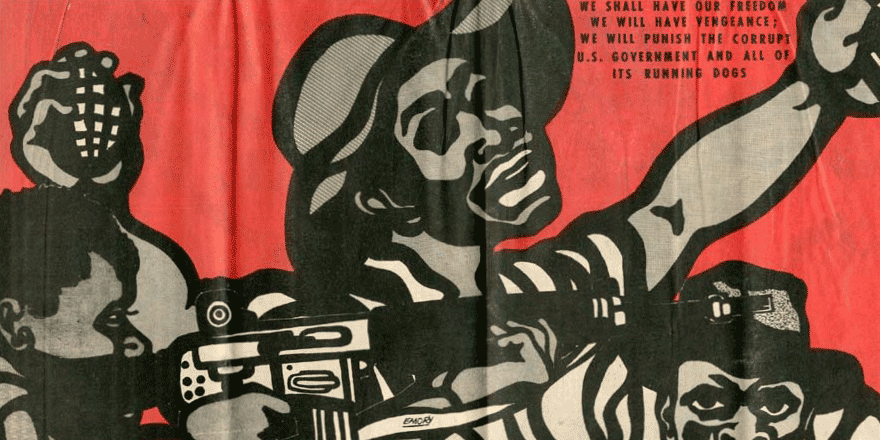
Emory Douglas worked as the Minister of Culture for the Black Panther Party for Self Defense from 1967 until the discontinuation of the Party in the 1980s. He’s been called the “Norman Rockwell of the ghetto”, and is known for his powerful illustrations in The Black Panther newspaper often depicting poor African Americans, most of who were aggravated, outraged, and ready for a fight. His artwork motivated disenfranchised members of the African American community to take action through his portrayals of police brutality, poverty, global imperialism, and poor living conditions.

Douglas’s use of thick bold lines, minimalist forms, and bright color inspired the trademark visual style for all of the Party’s newspapers, posters, and pamphlets, and his visuals have became one of the most poignant graphic records of the Black Panther’s legacy.
pan0
pan2
4
pan1
pan6
pan5
pan7

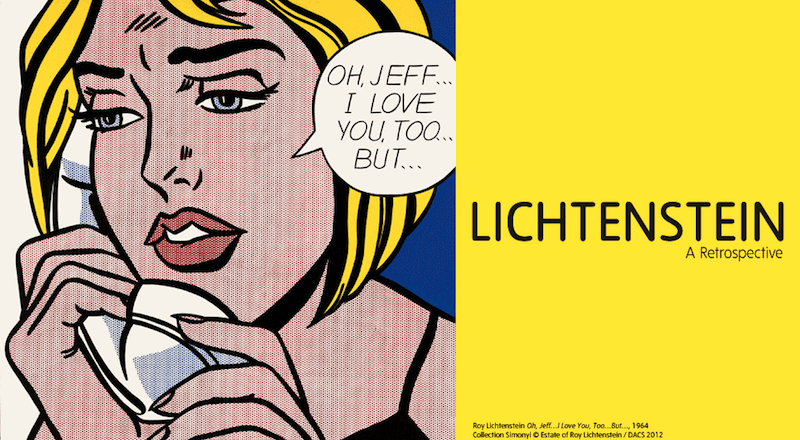
Lichtenstein retrospective comes to Tate Modern

Lichtenstein: A Retrospective will be opening at Tate Modern early this Spring, showcasing 125 of the artist’s most renowned paintings and sculptures. With his ironical appropriation of comic book imagery, advertising, and cartoon illustration, Lichtenstein irreverently challenged the limits of how art functions within mass culture. His iconic hand-painted Benday dots and fragmented speech bubbles present a jarring confrontation between high art and American popular media. Among the featured works will be such noteworthy pieces as Look Mickey (1961) and his Artist’s Studio series (1973-4). The exhibition runs from February 21 through May 27, so book your flight and pick us up some expensive biscuits while you’re over there.

Whaam! 1963 by Roy Lichtenstein 1923-1997
Sandwich and Soda 1964 by Roy Lichtenstein 1923-1997
Explosion 1965-6 by Roy Lichtenstein 1923-1997
Bull III 1973 by Roy Lichtenstein 1923-1997
Brushstroke 1965 by Roy Lichtenstein 1923-1997
Untitled (Paper Plate) 1969 by Roy Lichtenstein 1923-1997

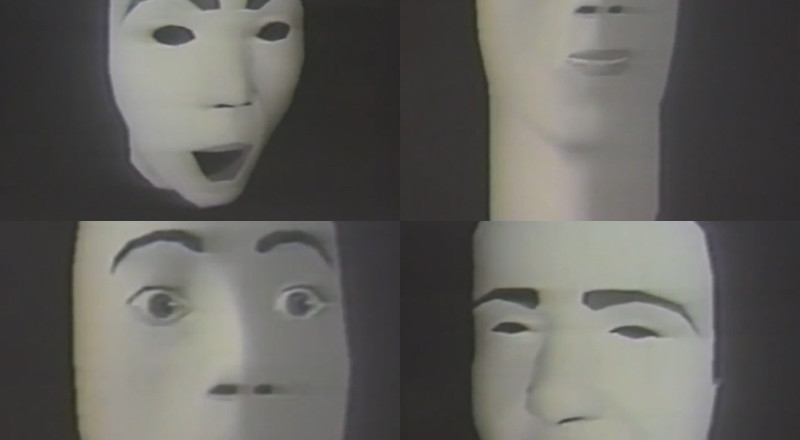
The first computer generated facial animation from 1974

In 1974, Frederic Parke received a PhD in computer science from the University of Utah College of Engineering, where he also created the first computer generated physically-modeled human face. Parke’s original idea of virtual modeling has seen exponential advancements as technology that was once only accessible at a top university research facility underwent major development and democratization in the span of four decades.

Today, a combination of 3D scanning and Web GL allows us to view a hyper-realistic 3D modeled head in interactive real time. Side by side, the difference between them is striking. What once required a tremendous amount of computing power just to display can now be viewed in-browser.

The Toronto-based designer whose lettering has become as American as apple pie

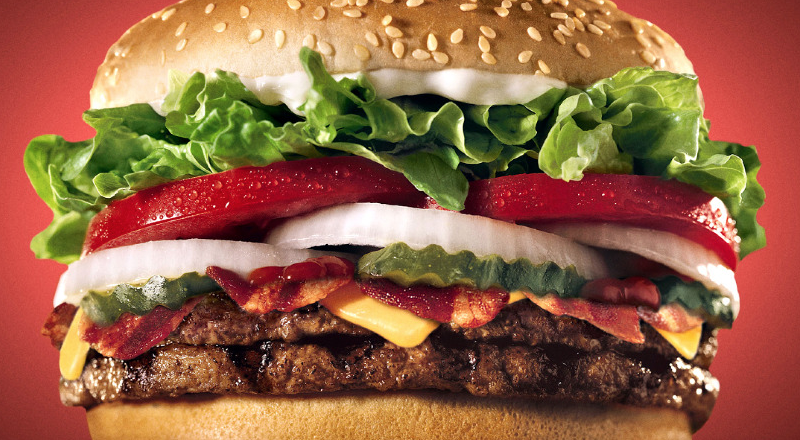
Maybe you’ve never heard of Ian Brignell, a Toronto-based logotype designer, but chances are you’ve seen his work. In fact, unless you’re hiding in an abandoned missile silo in the remote Siberian tundra (as we are), or in some post-capitalist haven (Toronto), it’s likely that his logotypes have colonized the majority of your day-to-day visual field. Brignell’s incredible talent for distilling the essence of America’s consumer identity has landed him design work with the most ubiquitous, high profile brands—everything from Burger King’s heavyset, corpulent lettering to the elegant scripts and serifed typefaces of top shelf potations like Coors Light and Miller High Life. Brignell’s instantly recognizable logos are the saccarine icing on an incredibly dry cake of globalized mass culture.


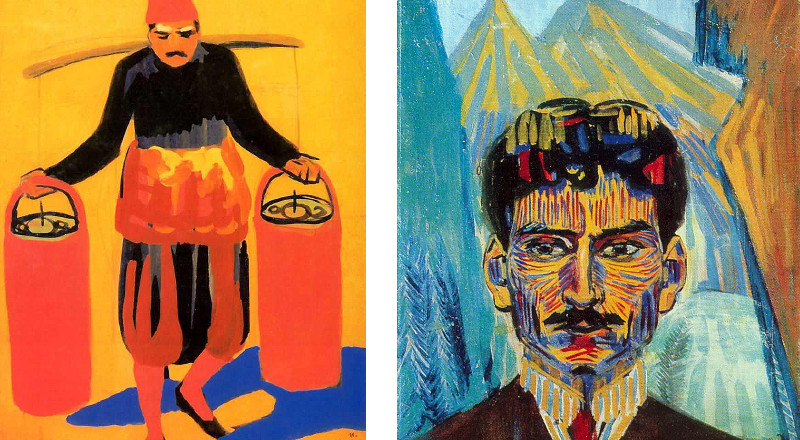
Post-impressionism in the Caucasus Mountains with Martiros Saryan


Martiros Saryan (1880-1972) was an Armenian painter regarded for his masterful selection and use of color. Inspired by the likes of Henri-Émile-Benoît Matisse and Eugène Henri Paul Gauguin, Saryan captured a sentimental slice of Armenian life in his minimal landscapes, meticulous still lifes, and bold, honest portraiture.

Saryan studied at the Moscow School of Arts and traveled throughout the neighboring region before returning to live in Armenia in 1921. After spending the second half of the 1920s in Paris, Saryan returned to the Soviet Union, tragically losing most of his work from that period at the fault of a fire on board his homeward bound vessel.

Among praise in the Moscow press, Saryan received the Order of Lenin on numerous occasions, as well as a role as a deputy to the USSR Supreme Soviet.


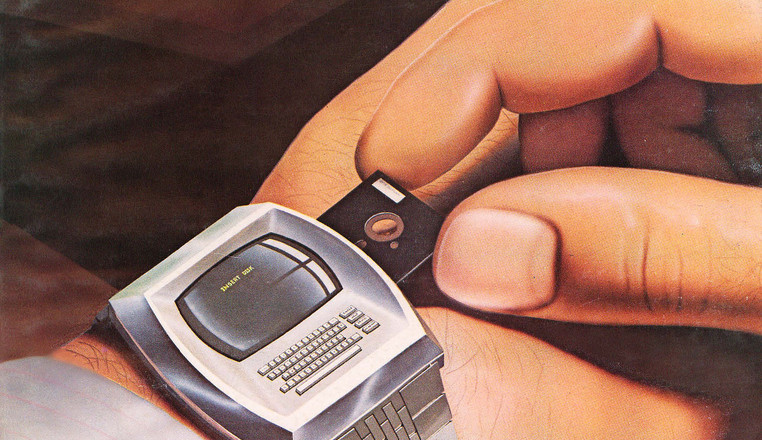
Computational magazine cover art for Byte: The Small Systems Journal has us nostalgic for a bygone retro-digital dreamworld

The dawn of the age of personal computing in the late ’70s and early ’80s offered what may now seem like quaintly outmoded fancies. But so far, many of the basic principles formulated in those early days of small systems programming seem to have gone relatively according to plan. Byte: The Small Systems Journal is a curious technological time capsule filled with chunky interfaces, cathode ray tube monitors, and data storage that doubles as dinnerware. You might well need more than a few minutes to power down these portable electronic devices for takeoff.


Siggi Eggertsson’s lively album art for Apparat Organ Quartet portrays tiny iconographic worlds

We’ve been admiring the colorful, curvaceous work of Berlin-based Icelandic designer Siggi Eggertsson for some time now. His artwork for Pólýfóníaour favorite album from fellow Icelanders Apparat Organ Quartet, packs quite a powerful punch, devoting a brilliant, iconographic vignette to each track, all the while maintaining his trademark flair for delightfully simple geometric forms.


Eggertsson has developed quite an extensive portfolio, including illustrations for Landsbankinn, a mural for the Iceland Design Centre in Reykjavík, a portrait of Philip Glass for the cover of The Village Voice, and even a T-shirt design for Icelandic UFC fighter Gunnar Nelson.


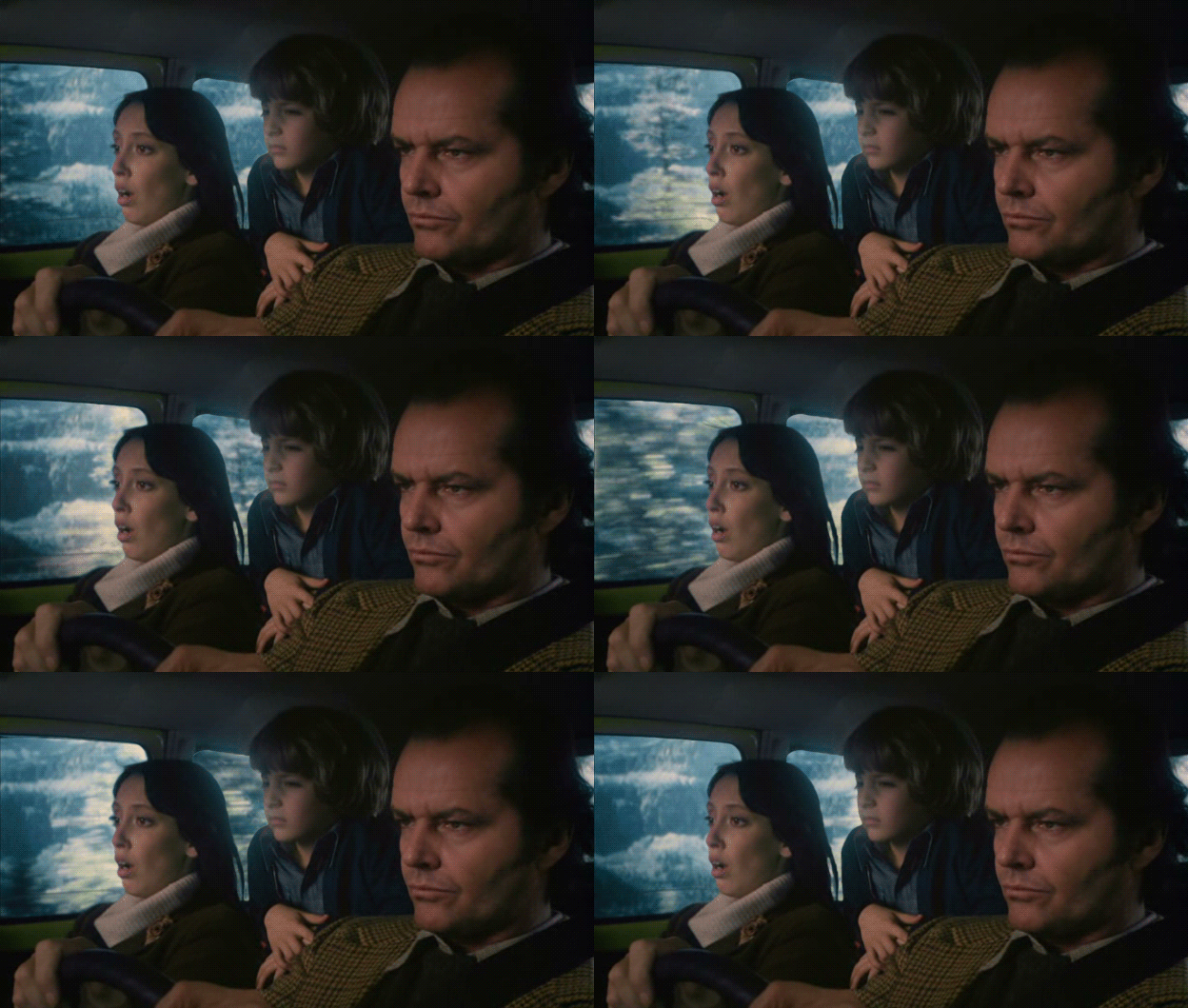
“The only thing that can get a bit trying up here during the winter is a tremendous sense of isolation”—Haunting cinemagraphs from Kubrick’s The Shining

In the spirit of hurricane-induced house arrest, we offer yet another series of cinemagraphs to continue our celebration of Kubrick’s distinctive mise-en-scene, which we began a while back with 2001. What better cure for infrastructural paralysis than the desolate-yet-claustrophobic creepiness of being trapped inside with The Shining?


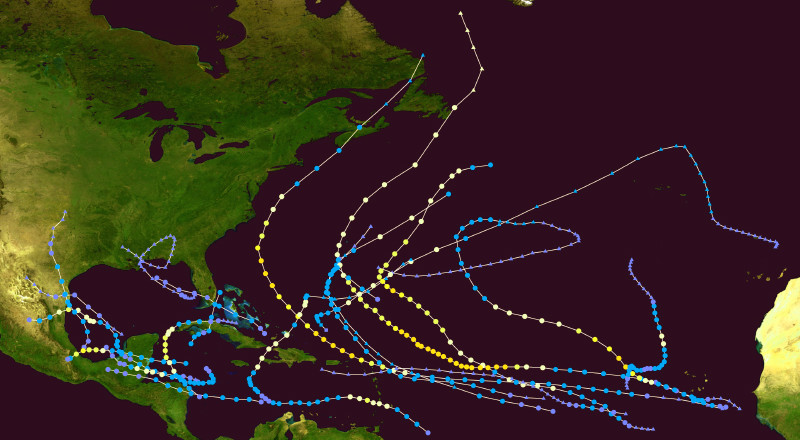
Stay in bed, light some candles, and curl up with a good map

With city transit at the mercy of what’s been dubbed “Frankenstorm,” we here in evacuation Zone C have found ourselves with ample time to remain indoors and contemplate the aesthetics of hurricane visualizations. Although an Ancient Greek mantle like Athena would’ve perhaps been a bit more epic, the super storm’s current invocation of Shelley’s Frankenstein; or, The Modern Prometheus is perhaps also a fitting reflection of the anthropogenic conditions that’ve fueled its foamy ire. But all this science and meteorology receives enough attention during natural disasters. How about a little appreciation for the longstanding artform of generating hurricane maps?


Il y a dans l’orange une aspiration à reprendre contenance après avoir subi l’épreuve de l’expression

Emerson called New York City “a sucked orange.” We’ll take it as a compliment, because today’s an orange-letter day here at Overhead Compartment, wherein we offer some curated delicacies of a tart persuasion. The scent of citrus is in the air, a waning light extends its amber glow—we’re serving tea and oranges that come all the way from China. Enthusiasts for simplicity that we are, we can’t resist the opportunity to isolate an aesthetic that we think worthy of admiration. Conjuring the zest of its namesake fruit, few other colors cast such an invigorating and distinctive mood as orange. We find it quite fetching in its radiating complexion and warmth.

In France, peeling the fruit is not yet considered an inconvenience.

Our regard for the color orange follows the same languid fashion as that which John McPhee, in his excellent book Oranges, describes of the fruit’s ritual celebration in France: “A Frenchman sits at the dinner table, and, as the finishing flourish of the meal, slowly and gently disrobes an orange. In France, peeling the fruit is not yet considered an inconvenience.”

The wonderful French poet and essayist Francis Ponge, certainly, observed such practices. “…it’s not enough to have only spoken of the orange’s special way of scenting the air and rejoicing its executioner,” he writes. Ponge offers a decisive rumination in “l’Orange,” from his Le parti pris des choses: “Emphasis must be placed on the glorious color of the resulting juice which, better than that of the lemon, forces one’s throat wide open as much to pronounce the word as to swallow the liquid.”

Emphasis must be placed on the glorious color of the resulting juice.

It’s unique for a color to possess such an immediate corollary in nature. Our admiration for orange is inseparable from oranges, evoking especially “the covering of this tender, fragile, pink oval ball inside its thick moist absorbant blotting paper,” a surface that demands to be squeezed. Ponge concludes: ”…the extremely thin but intensely colored epidermis with its bitter oil is just ruddy enough to catch worthily the light that reveals the perfect form of the fruit.”

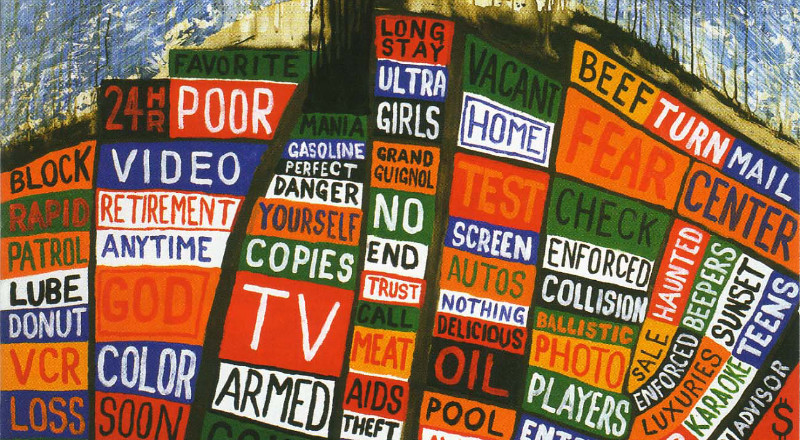
The vibrant work of Stanley Donwood—the artist behind the album cover for Radiohead’s Hail to the Thief

Stanley Donwood, which is the pen name of English artist and writer Dan Rickwood, has been collaborating with Radiohead on album covers and posters since 1994. In exploring his diverse body of work, which includes various types of prints, paintings and written projects to name a few, we found a pleasant consistency in Donwood’s aesthetic and subject matter.


You can explore more of Stanley Donwood’s iconic work on his website.

New York gets a taste of Analog Research Lab, Facebook’s brilliant internal print shop

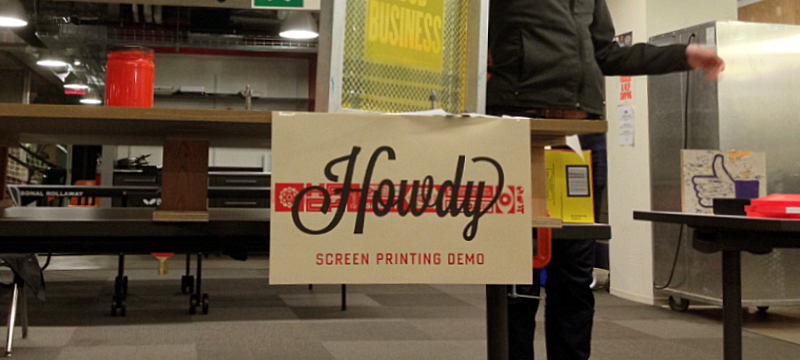
This week we had the opportunity to hang out with the Analog Research Lab, a hidden gem of a screen-printing studio started by designers Ben Barry and Everett Katigbak which operates out of the basement of Facebook headquarters. Barry and Katigbak began making posters while working on Facebook’s marketing team back in 2010, quickly garnering corporate support and expanding to produce motivational posters and other eye-candy for 36 offices worldwide.

We had the good fortune of catching Ben’s demo of the printing process on one of his recent visits to Facebook’s New York office. The printing table, which Ben had assembled hours earlier (after what sounded like a colorful New York City Home Depot experience), captures the Lab’s swift and resourceful nature. Amidst the social media giant’s signature propaganda, which even includes some exclusive Facebook branded adhesive tape, the Lab has been producing an onslaught of programmer and hacker oriented prints in vividly beautiful typography.


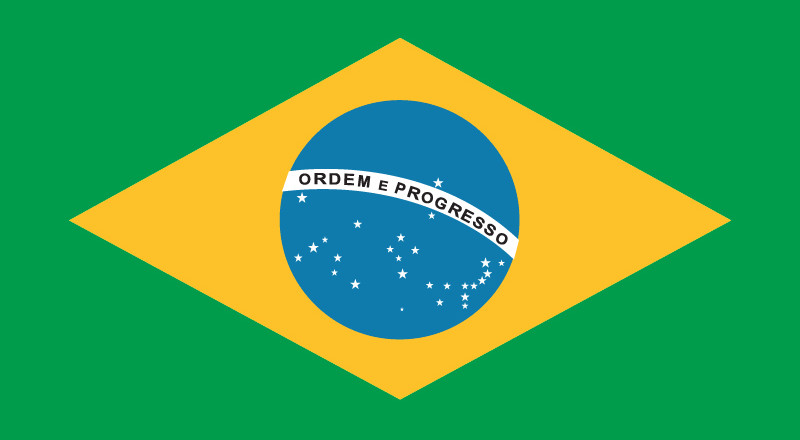
A blue disc depicting a starry sky within a yellow rhombus, on a green field

The Brazilian national flag is striking in its contrasts: the colorful, orderly geometry centered against a constellational smattering of stars, the straightforward sans-serif typography against its subtle contoured encasing, suggestive of a sphere.

It’s impossible to escape the elegance of the Brazilian flag. Even Wikipedia’s cut and dried caption takes on the aesthetic quality of a Haiku:

A blue disc depicting a starry sky spanned by a curved band inscribed with the national motto, within a yellow rhombus, on a green field.

The composition of stars immortalizes the night sky as seen from Rio on November 15, 1889, when the flag was first adopted. We think it’s one of the best uses of stars in flag design, with the former USSR coming in at a close second, both of which overshadow the current US flag, with its garish militaristic arrangement.

For a more thorough, technical explanation of the dimensions and assembly of this flag consult the official government style guide.

f1